
Way 2 Governance is a trusted corporate consultancy firm providing company registration, compliance management, taxation, and legal advisory services. We help businesses stay structured, compliant, and growth-ready.
Way 2 Governance is a trusted corporate consultancy firm providing company registration, compliance management, taxation, and legal advisory services. We help businesses stay structured, compliant, and growth-ready.

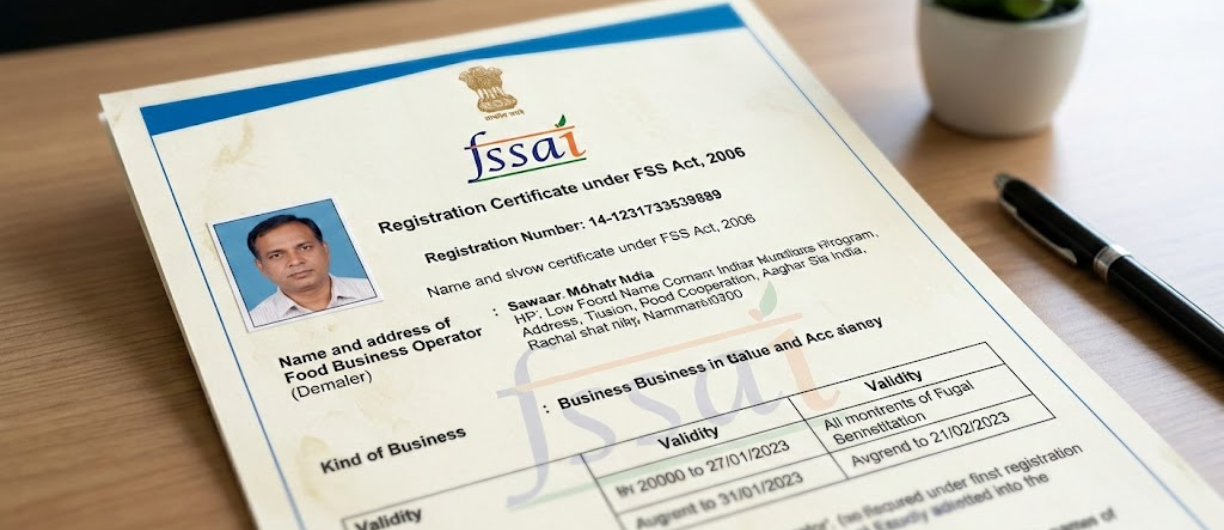
Food Safety and Standards Authority of India (FSSAI) Registration is a mandatory legal requirement for every business involved in the manufacturing, processing, storage, transportation, distribution, or sale of food products in India. It is governed under the Food Safety and Standards Act, which was enacted to consolidate various food laws and establish a single regulatory authority to ensure food safety and public health across the country.
Whether you run a small home-based tiffin service, a bakery, a cloud kitchen, a restaurant, a catering business, a food manufacturing unit, a wholesale trading company, or an import-export food enterprise, obtaining FSSAI registration or the appropriate license is not optional—it is a legal obligation. The primary objective of FSSAI registration is to ensure that food products meet prescribed quality standards, follow hygiene norms, and are safe for human consumption. By enforcing standardized practices, FSSAI helps reduce food adulteration, contamination, and misleading labeling in the market.
FSSAI registration not only fulfills a legal requirement but also significantly enhances the credibility and reputation of a food business. Displaying the FSSAI license number on packaging and at business premises builds customer trust and assures consumers that the food they purchase complies with national safety standards. In today’s competitive food industry, regulatory compliance also strengthens brand image and improves business opportunities, including partnerships with e-commerce platforms, retailers, and distributors.
Food businesses are categorized into three main types based on their annual turnover, production capacity, and scale of operations:
• Basic FSSAI Registration – This is applicable to small-scale or petty food businesses with an annual turnover of up to ₹12 lakhs. It is ideal for home-based food sellers, small retailers, temporary stall holders, small-scale cottage industries, and petty manufacturers. The registration process is comparatively simple and requires minimal documentation.
• State FSSAI License – This license is required for medium-sized businesses with an annual turnover between ₹12 lakhs and ₹20 crores, operating within a single state. It applies to restaurants, mid-sized manufacturers, storage units, transporters, marketers, and distributors. Businesses expanding operations beyond the basic threshold must upgrade to a State License.
• Central FSSAI License – This is mandatory for large-scale businesses with a turnover exceeding ₹20 crores, as well as importers, exporters, large manufacturers, operators in multiple states, and food businesses supplying to government agencies. Central licensing involves stricter compliance requirements and more detailed documentation.
The registration or licensing process involves submitting key documents such as identity proof and address proof of the proprietor or directors, proof of business premises, business constitution documents (like partnership deed, incorporation certificate, or MOA/AOA), details of food products handled, a Food Safety Management System (FSMS) plan, and declarations related to hygiene and safety practices. In some cases, inspection of the premises may be conducted by food safety officers before approval.
Once the application is approved, the business is issued a 14-digit FSSAI license or registration number. This number must be displayed at the place of business and printed on all food packaging, labels, and invoices as proof of compliance. The license is valid for a specific period (1 to 5 years) and must be renewed before expiry to avoid penalties.
Failure to obtain FSSAI registration or license can result in heavy fines, legal action, product seizure, or even closure of the business. Non-compliance with food safety standards can also damage brand reputation and lead to loss of consumer confidence. Therefore, ensuring proper documentation, selecting the correct license category, and complying with all regulatory norms is essential for smooth business operations.
Seeking professional assistance for FSSAI registration helps businesses avoid errors in documentation, choose the appropriate license type based on turnover and activities, respond effectively to authority queries, and secure timely approval without unnecessary delays. Proper compliance not only safeguards the business legally but also establishes a strong foundation for sustainable growth in the food industry.
Company incorporation typically takes 7–10 working days, depending on document readiness and government processing timelines. Our team manages documentation, filing, and follow-ups to ensure a smooth and timely setup.
Post-incorporation compliance includes ROC filings, annual returns, board meetings, GST registration (if applicable), tax filings, and statutory record maintenance. We provide a structured compliance calendar to keep your business fully compliant.
Yes. We assist with shareholder agreements, ESOP structuring, cap table planning, due diligence preparation, and FEMA compliance for foreign investments — ensuring your company is investment-ready and legally structured.
Absolutely. We provide complete advisory on FEMA regulations, RBI filings, cross-border structuring, subsidiary incorporation, and regulatory approvals required for foreign entities operating in India.
We follow a transparent pricing structure with clearly defined deliverables and timelines. Depending on your needs, we offer project-based, retainer-based, or long-term governance partnership models.